





Hotel Stambolov Reservations
Phone: +359 878 270 551
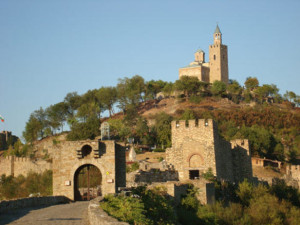 The medieval capital and epicenter of the Second Bulgarian Empire, Tarnovo—officially renamed Veliko Tarnovo in 1965—is truly a city offering countless historical landmarks, attractions, and charming places, especially for those who appreciate Bulgarian history and culture.
Walking along the narrow Gurko Street in the Old Town, named after General Iosif Gurko, who liberated the city together with his army from Ottoman rule in July 1877, visitors can admire beautifully preserved old houses, several museums, historic fountains, and churches. The street leads to the Museum of the Bulgarian Revival, housed in the former Ottoman Konak (government building) dating back to the period before Bulgaria’s Liberation. Another narrow street brings you to the Cathedral, from where the Tsarevets Hill and Fortress can be seen just across the river.
Without a doubt, the most beautiful part of the city lies around its three famous hills—Tsarevets, Trapezitsa, and Sveta Gora. Another must-visit destination in the Old Town is Samovodska Charshia.
Tsarevets Fortress
Tsarevets is the most famous landmark of Bulgaria’s medieval capital. The fortress stretches across the entire hill, situated between Sveta Gora and Trapezitsa. It is a remarkable reconstruction of the medieval stronghold and includes the restored Royal Palace.
At one end of the hill stands Baldwin’s Tower, commemorating the place where the Latin Emperor Baldwin of Flanders was imprisoned after being captured by Tsar Kaloyan. At the summit of the hill is the Patriarchal Cathedral, whose interior walls are decorated with striking murals depicting Bulgaria’s medieval history.
The fortress becomes even more spectacular during the famous “Sound and Light” show. As darkness falls, Tsarevets is illuminated with colorful lights synchronized with music and rhythms inspired by Bulgarian folklore, creating a dramatic presentation of the nation’s history.
Samovodska Charshia
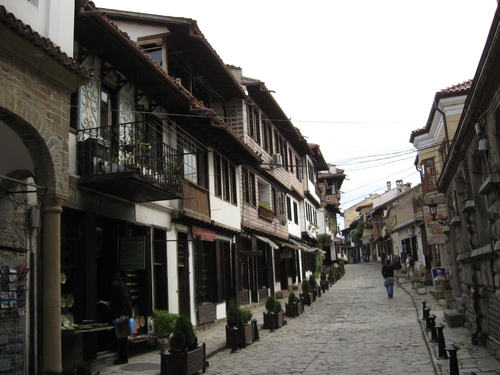 Samovodska Charshia is a picturesque cobbled street in the Old Town, renowned for its traditional artisan workshops. Here visitors can watch craftsmen at work and purchase a wide variety of handmade souvenirs.
At the entrance to the street stands the monument commemorating the Velchova Conspiracy, built on the site where the house of Velcho Atanasov, known as “The Glassmaker,” once stood. One of the side streets leads to the home of the celebrated Bulgarian writer Emiliyan Stanev, who was born in Tarnovo in 1907. At the opposite end of the street stands the monument to Stefan Stambolov, erected in the late twentieth century in honor of the distinguished Bulgarian patriot and statesman, who was also born in Tarnovo.
The Asenevtsi Monument
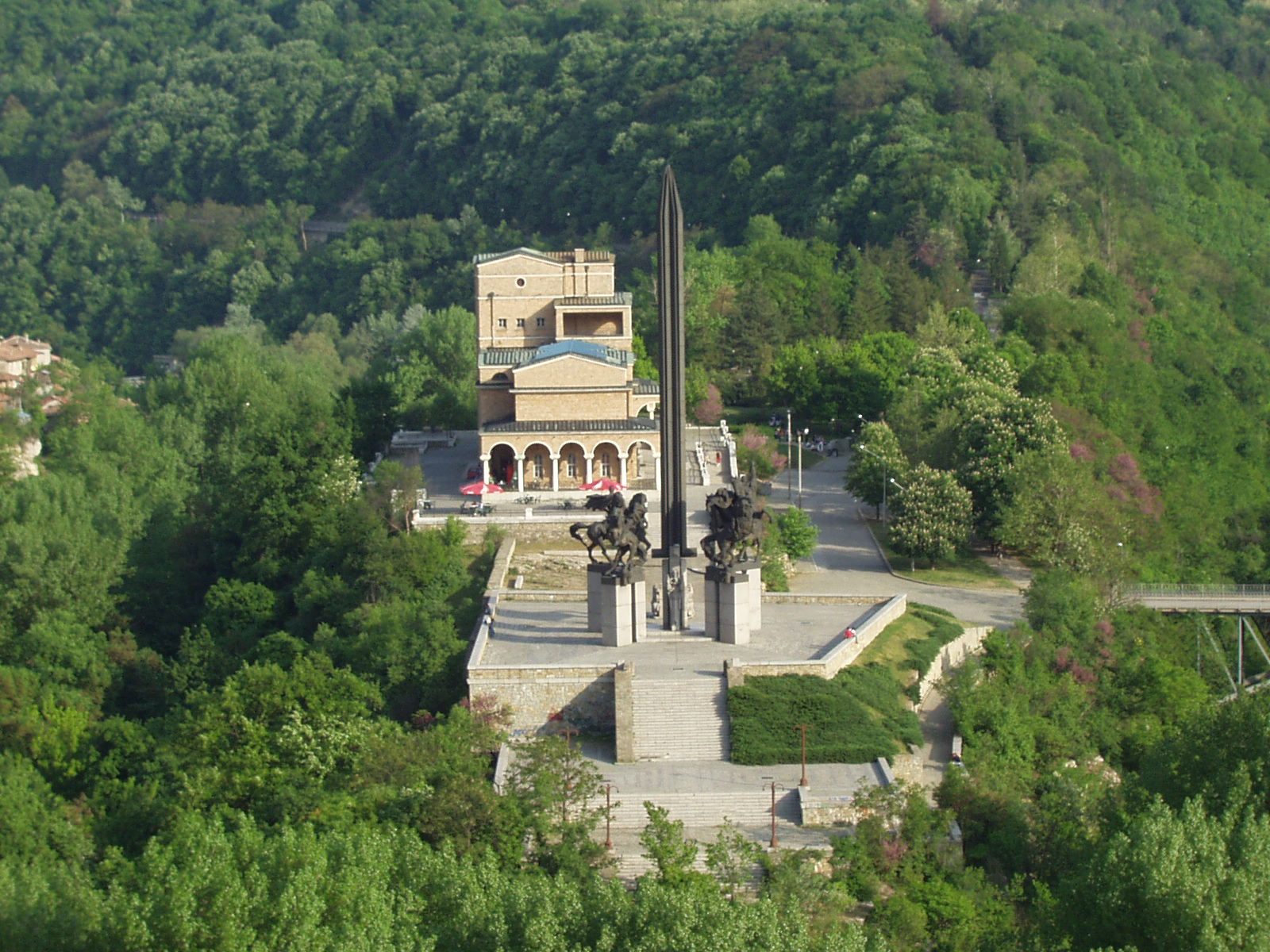
The Asenevtsi Monument, dedicated to the rulers Asen, Peter, Kaloyan, and Ivan Asen II, was built in 1985 to commemorate the 800th anniversary of the uprising led by brothers Asen and Peter.
The towering sword at the center of the monument symbolizes the strength and rise of medieval Bulgaria, while the four rulers gathered around it represent the founders and greatest leaders of the Second Bulgarian Empire.
The monument occupies one of the city’s most scenic locations, overlooking the Yantra River at the foot of Sveta Gora Hill, next to Stambolov Bridge. Surrounded by the picturesque houses perched on the hillsides, it offers one of the finest panoramic views in Veliko Tarnovo and is well worth visiting for both its historical significance and breathtaking scenery.
Arbanasi
Arb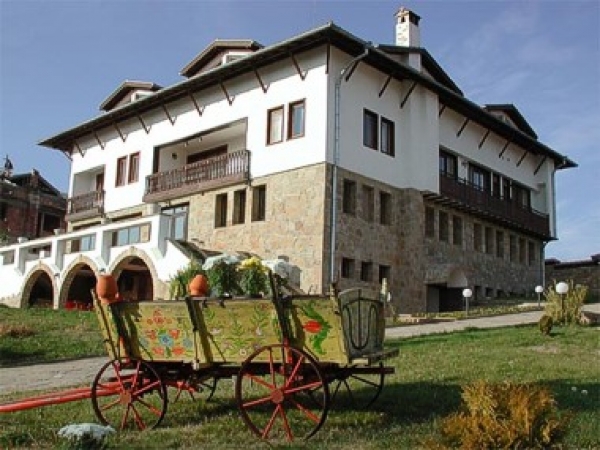 anasi is an outstanding historical and architectural reserve that preserves the spirit of Bulgaria’s National Revival period. The village and its surroundings are home to numerous cultural and historical landmarks that appeal to visitors of all interests.
A walk through the village center reveals beautifully preserved traditional houses built during the Bulgarian Revival, including the famous Konstantsalieva House, Hadzhiilieva House, Kandilarova House, Hadzhinikova House, the Chamurov House, and many others.
From Arbanasi, visitors enjoy magnificent panoramic views of Tsarevets and Trapezitsa Hills, among Bulgaria’s most visited cultural destinations.
In addition to its historic houses, Arbanasi is renowned for its remarkable churches and nearby monasteries. Within the village itself are the Monastery of the Dormition of the Mother of God and the Monastery of St. Nicholas. The churches of St. George, St. Athanasius, St. Demetrius, and the Nativity of Christ are famous throughout Bulgaria for their exceptional architecture and frescoes.
Arbanasi Monastery
The ar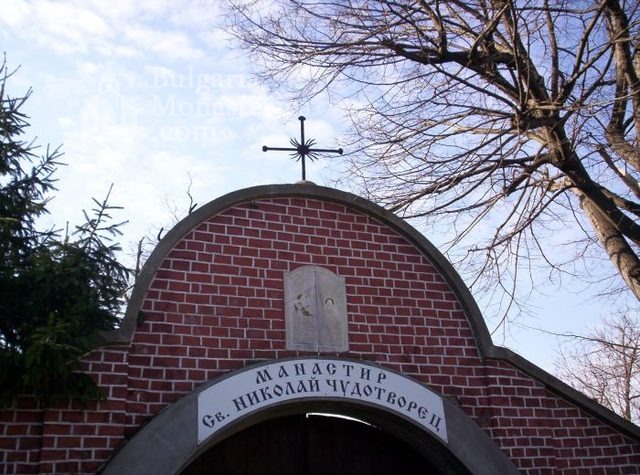 ea surrounding Arbanasi is home to several monasteries, two of which are located within the village itself. The smaller monastery, dedicated to the Dormition of the Mother of God, has been declared a cultural monument.
Situated in the northwestern part of Arbanasi, it remains an active monastery. The complex consists of a church, residential buildings, and a chapel. In its early history, it was a wealthy religious center and an important hub of Bulgarian literacy and culture. Following devastating raids by the Kardzhali bands, it was abandoned.
The monastery is particularly famous for its miraculous icon of the Virgin Mary, carved in relief and covered with silver. The present monastery church was built in 1680, while the residential buildings were added in 1716 by the monk Daniel from Troyan Monastery. The beautiful frescoes date from the early seventeenth century and 1762, with further restoration carried out in 1836, as recorded by an inscription found on the site.
The monastery is believed to have medieval origins, supported by archaeological discoveries of an ancient Roman road and the remains of an old fortress nearby.